
Could bad debts lower your 2026 taxes?
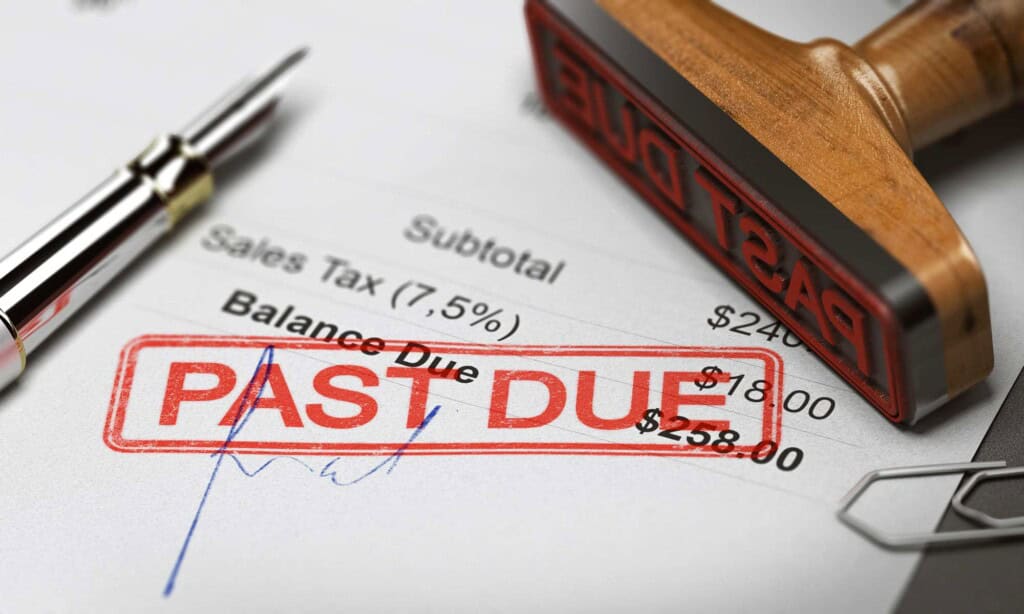 When customers or others don’t pay what they owe your business, you may be able to claim a bad debt deduction to help offset the financial loss. But it isn’t automatic. Businesses must satisfy specific federal tax rules and maintain adequate records to support the deduction.
Not every unpaid debt is eligible
Whether an unpaid debt is deductible depends on several factors. First, the debt generally must be connected to your trade or business. Examples include unpaid customer invoices, certain loans to customers or suppliers and some business-related guarantees.
The debt also must be bona fide. This means there must have been a genuine expectation of repayment when the money was advanced, or credit was extended. Documentation such as invoices, contracts, promissory notes and payment terms can show the transaction was a legitimate debt rather than a gift or capital contribution.
Additionally, not every business is eligible to deduct unpaid customer receivables. The purpose of the deduction is to offset a previous tax liability. So, you must have previously included the receivable in your income.
If your business uses the cash-basis method of accounting, you generally recognize income only when payment is received. Because unpaid invoices generally haven’t been included in taxable income, they’re typically not deductible as bad debts.
Accrual-basis businesses generally recognize income when it’s earned rather than when payment is received. As a result, they may be eligible for a bad debt deduction if an amount previously included in income later becomes partially or totally worthless. For partially worthless business debts, a charge-off for accounting purposes generally is required.
Document your collection efforts
One of the most important requirements is showing that you’ve made reasonable efforts to collect the debt. Simply deciding that a customer probably won’t pay usually isn’t enough to conclude it’s worthless.
It’s also critical to keep records of the actions you’ve taken. These may include invoices, reminder notices, collection letters, payment plans, correspondence with attorneys or collection agencies and information showing the debtor’s financial difficulties, bankruptcy or insolvency. Going to court isn’t necessary if you can demonstrate that obtaining a judgment would be futile.
If you haven’t consistently documented your collection efforts, there’s still time. Review overdue accounts and make sure your files reflect the steps you’ve taken to pursue payment. This can make a significant difference if the IRS questions your deduction.
Review your receivables now
If you have aging receivables or other potentially uncollectible business debts, contact us before year end. We can help evaluate your options, ensure your documentation is complete and identify the deductions you may be eligible to claim.
SIDEBAR: How mixed-purpose debts are treated
Some debts may involve both business and personal motives. For example, suppose you guarantee a loan for one of your best customers, who also happens to be a close friend. If the borrower defaults, whether the loss is treated as a business or nonbusiness bad debt depends on whether your dominant motivation in making the guarantee was to help your business or your friend.
The distinction is important because nonbusiness bad debts are deductible only if they’re totally worthless. And they’re treated as short-term capital losses, which can generally offset capital gains and up to $3,000 of ordinary income annually, with any excess carried forward.
4 tax-smart investment moves before year end
 As the end of 2026 approaches, look beyond investment performance and consider how taxes may affect your overall returns. Although tax considerations generally shouldn’t drive investment decisions, a year-end portfolio review may identify opportunities to reduce your taxes. Here are four to consider.
1. Harvest losses (or gains)
Review the capital gains and losses you’ve realized so far this year. If you have a net capital gain, you may be able to offset some or all of it through tax-loss harvesting before year end. This means selling some investments that have declined in value compared to what you paid for them.
If you expect to end the year with a net capital loss, consider selling some appreciated investments. The resulting gains can be offset by your already-recognized capital losses, essentially making the sale tax-free. But don’t eliminate your entire net capital loss. Each year you generally can use up to $3,000 of net capital losses ($1,500 if married filing separately) to offset ordinary income (such as wages, business income and taxable retirement plan distributions). Any remaining losses can be carried forward indefinitely.
2. Avoid the wash sale rule
If you sell an investment at a loss for tax purposes, be mindful of the wash sale rule. Under this rule, if you sell a security at a loss and purchase the same or a substantially identical security within the 30-day period before or after the sale, the loss generally isn’t deductible in the current year. Instead, the disallowed loss is added to the basis of the replacement security, postponing the tax benefit until the replacement security is sold.
To avoid this result, consider waiting at least 31 days before repurchasing the investment or replacing it with a similar — but not substantially identical — security. Purchases by a spouse or certain related entities can also trigger the wash sale rule.
3. Time the sale of appreciated investments
Before selling investments that have increased in value, consider whether you should wait until next year. If you expect your taxable income to be lower in 2027 — perhaps you’re retiring or anticipating lower business income — delaying the sale could reduce the tax rate you pay on it.
However, if you expect to be in a higher tax bracket next year, selling in 2026 may be advantageous. Consider your expected income, cash needs and tax situation.
4. Donate appreciated securities
If you’re planning charitable gifts, consider donating long-term appreciated securities instead of cash. This can help you avoid capital gains tax you’d have to pay on the appreciation if you sold the securities. Plus, if you itemize, you generally can claim a charitable deduction for the fair market value of the securities.
Don’t donate stock that’s worth less than what you paid for it. Instead, sell the stock so you can deduct the loss and then donate the cash proceeds to charity.
Moving forward
Talk with us before making significant investment moves. We can coordinate your investment decisions with your overall tax strategy.
Make the most of your HSA tax benefits
 If you’re eligible to contribute to a Health Savings Account (HSA), consider taking a closer look at your contribution strategy. You may be able to reduce your 2026 taxes while strengthening your long-term financial security. Although many people use HSAs to pay current medical expenses, they can also help fund retirement.
Maximize tax savings
HSAs offer valuable tax advantages. Generally, contributions are pretax if made through payroll deductions or tax-deductible (without itemizing) if made directly to an HSA you establish yourself. Investment earnings grow tax-deferred, and withdrawals used for qualified medical expenses are tax-free.
If you haven’t reached the 2026 contribution limit, there’s still time before year end. For 2026, you can contribute up to $4,400 for self-only coverage or $8,750 for family coverage, plus an additional $1,000 catch-up contribution if you’re age 55 or older.
To be eligible to contribute, you generally must be covered by a qualifying high-deductible health plan (HDHP) and not be enrolled in Medicare or covered by certain other health plans. For 2026, an HDHP generally must have a minimum deductible of $1,700 for self-only coverage ($3,400 for family coverage) and maximum annual out-of-pocket expenses of $8,500 ($17,000 for family coverage). Beginning in 2026, HSA eligibility has expanded by generally treating bronze and catastrophic plans as HDHPs.
Think beyond medical expenses
An HSA can do more than help pay today’s health care costs. If your financial situation allows, consider paying current qualified medical expenses out of pocket and leaving your HSA balance invested. Unused funds carry forward indefinitely and can continue growing on a tax-advantaged basis.
This strategy may also help build additional tax-advantaged retirement savings. After age 65, you may withdraw HSA funds for nonmedical expenses without the 20% penalty that generally applies to earlier nonqualified withdrawals, though you’ll owe regular income tax on those distributions. Withdrawals used for qualified medical expenses remain tax-free, so tax-free HSA funds may be used to pay certain Medicare premiums and other eligible health care expenses during retirement.
Don’t wait
Now is a good time to review whether you’re making the most of your HSA. If your goal is to lower your taxes, prepare for future health care or supplement your retirement savings, we’re here to assist you.
Ready your books for tax season
 One of the most common bookkeeping mistakes business owners make is mixing business and personal finances. Addressing this issue before year end can simplify tax preparation, improve the accuracy of your financial records and help reduce the risk of IRS questions.
Build a strong foundation
Business expenses generally must be “ordinary and necessary” to qualify for a tax deduction. If personal purchases are recorded as business expenses, you could overstate deductions. On the other hand, if legitimate business expenses are paid with personal funds but never recorded, you could miss valuable deductions.
Mixing business and personal transactions also can distort your financial statements, making it harder to measure profitability, manage cash flow and make informed business decisions. For corporations and limited liability companies, maintaining separate finances helps reinforce the legal distinction between the business and its owners.
Use this checklist to help ensure your records are complete and accurate:
- Review business bank and credit card statements to identify personal transactions that should be reclassified.
- Record legitimate business expenses paid personally by owners or employees, and ensure reimbursements are handled properly.
- Verify that owner draws, capital contributions and shareholder or partner distributions have been recorded in the correct accounts rather than as business expenses.
- Gather receipts, invoices and other supporting documentation and confirm that your records are complete and organized.
Seeking guidance
Accurate books make tax season easier. Turn to us for guidance.
Tax Calendar
September 10 – Employees must report August tip income of $20 or more to employers (Form 4070).
September 15
- Individuals must pay the third installment of 2026 estimated income taxes.
- Calendar-year corporations must pay the third installment of 2026 estimated income taxes.
- Calendar-year S corporations on extension must file a 2025 income tax return (Form 1120-S) and pay any tax, interest and penalties due and, if applicable, make contributions for 2025 to certain employer-sponsored retirement plans.
- Calendar-year partnerships on extension must file a 2025 income tax return (Form 1065 or Form 1065-B).
September 30 – Calendar-year trusts and estates on extension must file a 2025 income tax return (Form 1041).
About Batley CPA
Batley CPA, LLC is a full-service CPA firm providing tax, accounting, payroll and advisory services to businesses and individuals throughout Green Bay and the Fox Cities. Batley CPA regularly provides clients with best practices and strategies to maximize cash flow, profit, reduce taxes, manage costs and risk, and bring meaning to financial and operational data. The company has offices in Appleton, Neenah and Green Bay.